Center for Interdisciplinary Conflict Engagement and Resolution

Conflict is not pure chaos. It has structure.

CICERO (Yayasan Remediasi Masa Depan) studies how conflict escalates and resolves across legal, macroeconomic, and geopolitical arenas, and works to reduce the societal conflict that follows — above all where government outreach meets the public. The economic analysis of law, mathematical modelling, and game theory, in place of narrative diplomacy.

Scroll
The thesis

Conflicts — in the courtroom, in trade wars, in territorial disputes — are rarely driven by ideological difference alone. They are also driven by structural incentives, resource allocation, and rational utility maximisation.

The Center for Interdisciplinary Conflict Engagement and Resolution (Yayasan Remediasi Masa Depan) is an independent think tank dedicated to the study of conflict escalation and resolution across legal, macroeconomic, and geopolitical arenas. Its purpose is practical: to reduce the societal conflict those disputes leave behind — most of all the conflict that arises when government reaches out to the public, and policy meets the people it lands on.

CICERO abandons the purely historical and diplomatic narratives that dominate traditional international-relations institutions. In their place it relies on the economic analysis of law, mathematical modelling, and game theory to price both the rules themselves and the behaviour they produce — and to say, with numbers attached, what a dispute will cost and where it can be settled.

CICERO is constituted as an independent research foundation, carrying two statutory mandates: the advancement of knowledge, and the advancement of education. Both are held to one test — whether the work measurably lowers the cost of conflict for the society that bears it.

About the institute

Arenas

Three arenas. One structural reading.

Different arenas, identical mechanics: parties with asymmetric information, bounded resources, and payoffs that can be modelled before a single move is made. Read early enough, each one can be defused before it spreads into wider societal conflict — the sharpest case being government outreach, where a single policy can set the whole public against itself.

01

Societal Conflict

A dispute is a negotiation under pressure. We work out where one can fairly settle, what delay costs the people caught in it, and which laws create disputes that never needed to happen. The legal system sets those terms; set badly, they turn disagreement into societal conflict.

  • Finding the laws that cause avoidable disputes
  • Where disputes settle, in or out of court
  • What legal uncertainty costs people
  • How policy rollouts create public friction
  • Who gains, who loses, who was never asked
  • Making procedures faster and fairer
02

Institutional Conflict

Institutions decide who pays and who benefits: tax, public spending, borrowing, tariffs, central bank rates. Whatever the politics, those choices carry structural incentives we can measure — who is charged, who is exempt, who carries the burden, and how it lands on households and the industries driving development.

  • Tax policy: who is charged, who is exempt
  • Where the tax burden actually falls
  • Impact on development and the industries driving it
  • Monetary policy: rates, currency, inflation
  • Fiscal policy: spending, borrowing, public debt
  • Tariffs, sanctions and trade measures
03

Transboundary Conflict

Conflict that crosses borders: territory and sea lanes, and now chip supply chains and AI. States and non-state actors move on structural incentives under constraint. We build the payoff matrices narrative diplomacy leaves implicit — where escalation pays, and what each move really costs.

  • Maritime claims and sea-lane control
  • Territorial and border disputes
  • Chip supply chains and export controls
  • AI and emerging-technology competition
  • Deterrence and signalling
  • Coalition stability
The analytical engine

Method before narrative.

Five disciplines, run together, with the economic analysis of law as their spine. Each finding must survive both peer review and the pressure of a live negotiating room — and each is pointed at the same outcome: less societal conflict, at lower cost.

M/01

Game-Theoretic Modelling

Formal models of bargaining, deterrence, and escalation — payoffs, information sets, and equilibria made explicit and testable.

M/02

Causal Inference

Panel data, natural experiments, and identification strategies that separate what caused a conflict from what merely accompanied it.

M/03

Computational Conflict Mapping

A cloud and AI research laboratory that maps conflict trends, stakeholder networks, and dispute-resolution effectiveness at regional, national, and international scale.

M/04

Economic Analysis of Law

Law read as a price system. Every rule changes what a dispute costs, who ends up paying it, and how people behave long before they reach a court. We measure those effects — incentives, deterrence, and whether a rule is worth what it costs — so legislation and judgments can be judged by what they actually produce, not by how well they are argued.

M/05

Field Research & Case Study

Structured field work and case reconstruction: the ground truth that keeps the models honest.

Conflict arenas under continuous study
Disciplines in the method stack
Programme lines in the charter
JAKARTA Registered seat · operating internationally
Horizon

The disputes that will define the next century are already structured.

Territory, trade, data, climate, and the law that will have to arbitrate all four. CICERO builds the instruments to read them before they harden.

Current programme

Research in the field right now.

Live tracks combining field research, case reconstruction, and formal modelling — each chosen for the societal conflict it stands to reduce.

RS/2026-01  ·  Active

Preventing Post-Reform Conflicts

An Interdisciplinary Approach to Reform Without Reprisal

Reform creates losers, and losers retaliate. Time and again the officials who pushed a reform through are later investigated, charged, or convicted — sometimes under the very provisions they set out to change. This track maps how that reprisal works, where the exposure sits, and what sequencing and safeguards keep reformers out of the dock.

Legal exposure Reform sequencing Case reconstruction
RS/2026-02  ·  Active

Clarifying Legal Risk in Indonesia

An Interdisciplinary Approach to Obscure Law and Institutional Overlap

Indonesian law carries provisions that are vague, overlapping, or dormant until they are suddenly enforced — and institutions whose mandates blur into one another. That obscurity is itself a cost, paid long before any court rules. This track maps where it sits, what it prices, and which institutional fixes compress it.

Legal certainty Institutional mapping Regulatory analysis
FM/2026-01  ·  Convening

Indonesian Future Legal Leaders

Seminar series & lecture programme

A standing seminar and lecture programme for the next generation of legal leadership — pairing doctrinal grounding with the quantitative toolkit CICERO works in.

Seminars Legal lectures Mentorship
Programmes

Knowledge, and the people who will use it.

The charter binds CICERO to two mandates — the advancement of knowledge and the advancement of education. Six programme lines carry them, and all six exist to put fewer disputes on a path to societal conflict — starting with the friction government outreach creates.

P/01

Research & Scientific Inquiry

Field research, case studies, and policy analysis into the roots of social conflict, business disputes, international law, and public-policy contestation.

  • Interdisciplinary conflict research
  • Conflict-trend data laboratory
  • Dispute-resolution effectiveness studies
P/02

Publication & Literature

An indexed scholarly journal, working papers, and policy briefs written to be used — by government, academia, and practitioners alike.

  • Indexed periodic journal
  • Working papers & policy briefs
  • Textbooks and reference modules
P/03

Forums & Academic Dissemination

Symposia, national and international conferences, public seminars, and focus group discussions convening scholars, enforcement officials, and stakeholders.

  • National & international symposia
  • Focus Group Discussions
  • Public legal & policy seminars
P/04

Professional Certification

Training and certification for mediators, arbitrators, and professional negotiators, recognised by the relevant judicial institutions.

  • Mediator certification
  • Arbitrator pathway
  • Professional negotiation practice
P/05

Short Courses & Workshops

Practical instruction in negotiation technique, alternative dispute resolution (ADR), and applied game theory.

  • Negotiation technique
  • Alternative Dispute Resolution
  • Applied game theory
P/06

Competitions & Future Fixer

Student moot court and mediation competitions that sharpen practice early — and the Future Fixer scholarship that funds the people who will do the fixing.

  • Moot court competition
  • National mediation competition
  • Future Fixer scholarship
Governance

The people accountable for the work.

A three-officer executive board, and a Board of Trustees that ratifies everything the institute commits to — and holds it to its purpose of reducing societal conflict.

Dr. Giovanni Christy
Executive Director

Dr. Giovanni Christy

Executive Board

Leads CICERO's day-to-day operation and the execution of the research agenda — from field research design and case selection through to the publication of working papers and policy briefs. Dr. Christy holds the institute to a single standard: every finding must survive both peer review and the pressure of a live negotiating room.

Research DirectionPolicy BriefsInstitutional Strategy
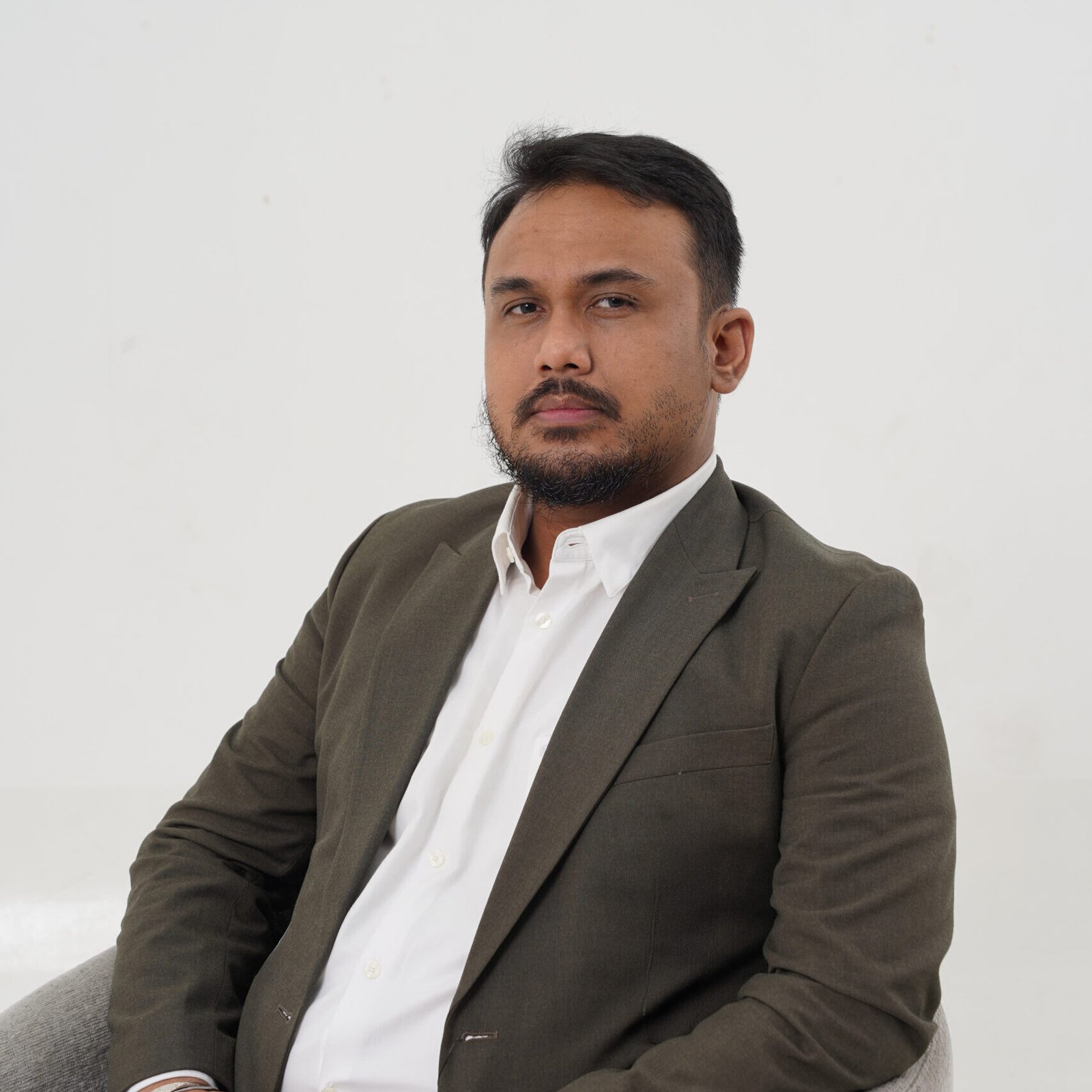
Kadek Rama Maheswara Putra
Director of Finance

Kadek Rama Maheswara Putra

Executive Board

Stewards the foundation's capital, grant architecture, and programme budgets. Rama builds the financial discipline that keeps CICERO's research non-partisan and its funding transparent — including the endowment logic behind the Future Fixer scholarship.

FinanceGrants & EndowmentGovernance
Ananda Rizky Damatra
Director of Communication

Ananda Rizky Damatra

Executive Board

Translates dense quantitative work into arguments that move ministries, courts, boardrooms, and newsrooms. Ananda runs CICERO's dissemination engine: the symposia, national and international FGDs, and the public-facing editorial programme.

CommunicationConveningPublic Affairs
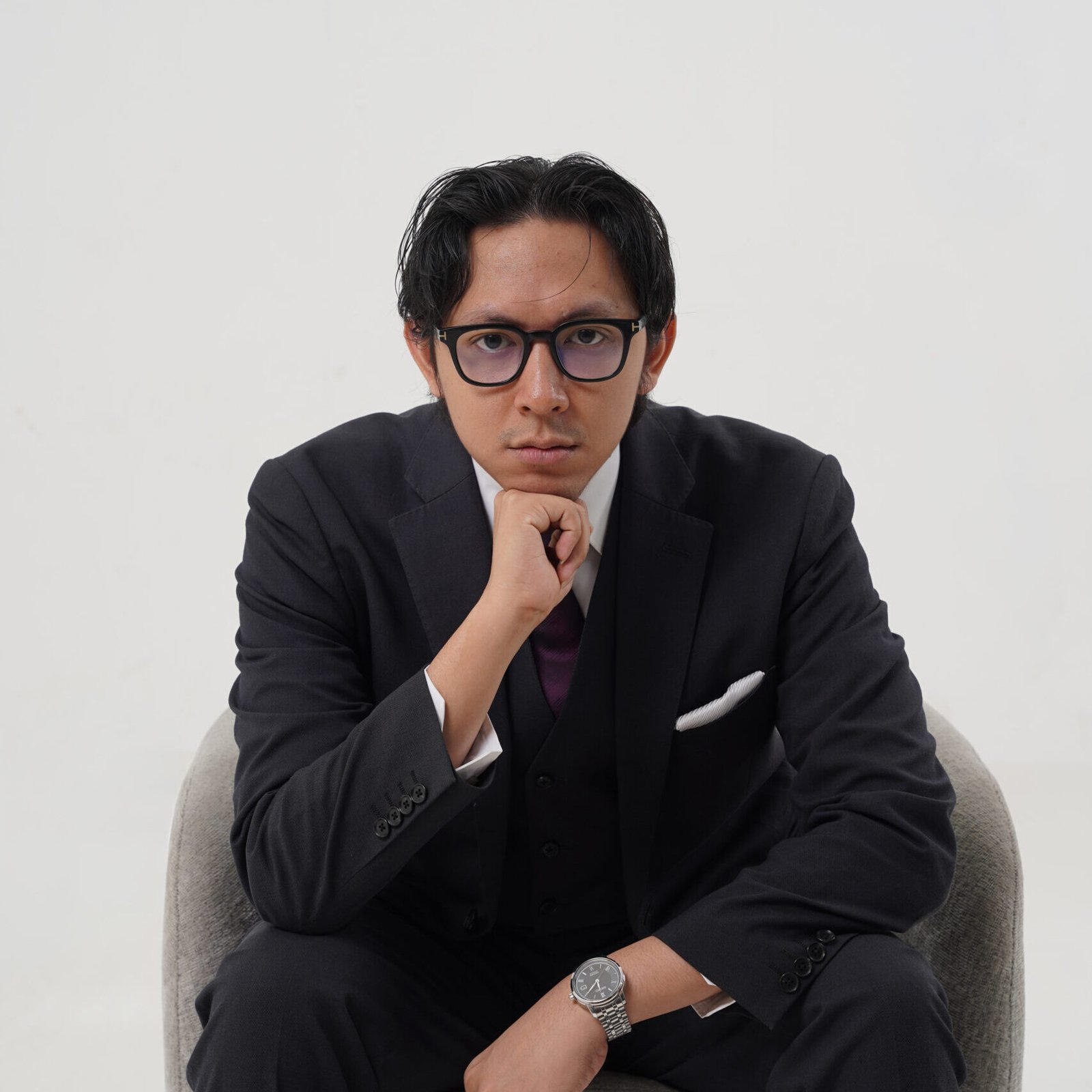
Vincent Ricardo
Chairman of the Board of Trustees

Vincent Ricardo

Board of Trustees

As Chairman, Vincent Ricardo sets the institute's intellectual agenda — steering CICERO away from the narrative diplomacy that dominates conventional international-relations work and toward a practice built on the economic analysis of law, game theory, and causal inference. He holds the institute to a single premise: that conflict is not an accident of temperament but a structure that can be measured, modelled, and re-engineered. He convenes the Board of Trustees, guards the independence of the research programme, and oversees CICERO's long-horizon commitments: the indexed journal, the Future Fixer scholarship, and the build-out of the cloud and AI laboratory that maps conflict trends across regional, national, and international arenas.

StrategyInstitutional DesignReform PoliticsConflict Theory

Full leadership profiles

Insights

Working papers, briefs, and dispatches.

Published to be used — by government, academia, and practitioners alike — so disputes are settled before they harden into societal conflict.

All insights